| People | Alumni | Positions | Events |
| Research Program |
| Current Projects |
| Publications |
| Theses |
| Computer Facilities |
| Microarray Lab |
| Microscopy |
![]() |
Home |
![]() |
![]() |
Imprint | ![]() |
Sitemap | ![]() |
Intranet | ![]() |
Contact | ![]() |
Links | ![]() |
![]() |
![]() |
© 2009 Institute for Genomics and Bioinformatics ·
Graz University of Technology · Petersgasse 14, 8010 Graz, Austria Tel +43-316-873-5331 · Fax +43-316-873-5340 · URL http://genome.tugraz.at · |
| GENERAL DESCRIPTION |
| The advancement of genomic technologies -
including microarray, proteomic and metabolic approaches - have led
to a rapid increase in the number, size and rate at which genomic datasets
are generated. Managing and extracting valuable information from such datasets
requires the use of data management platforms and computational approaches.
In contrast to genome sequencing project, there is a need to store much more
complex ancillary data than would be necessary for genome sequences.
Particularly the need to clearly describe an experiment and report the variables
necessary for data analysis became a new challenge for the laboratories.
Furthermore, the vast quantity of data associated with a single experiment can
become problematic at the point of publishing and disseminating results.
Fortunately, the communities have recognized and tackled the problem through
the development of standards for the capture and sharing of data.
The microarray community arranged to define the critical information necessary
to effectively analyze a microarray experiment and developed the Minimal Information
About a Microarray Experiment (MIAME). Subsequently, MIAME was adopted by
scientific journals and several software platforms supporting MIAME were developed .
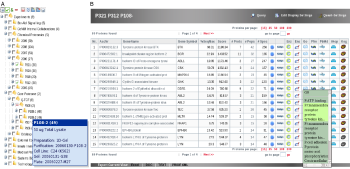
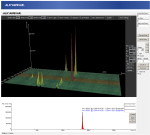
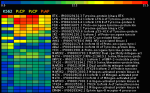
The principles underlying MIAME have reasoned beyond the microarray community. The Proteomics Standard Initiative (PSI) aims to define standards for data representation in proteomics analogues to that of MIAME and developed Minimum Information About a Proteomic Experiment (MIAPE) . An implementation independent approach for defining the data structure of a Proteomics Experiment Data repository (PEDRo) was developed using unified modeling language (UML) and a PSI compliant public repository was set up. However, to the best of our knowledge there is currently no academic or commercial data management platform supporting MIAPE and enabling PRoteomics IDEntifications database (PRIDE) export. We have developed MAss SPECTRometry Analysis System (MASPECTRAS), a platform for management and analysis of proteomic LC-MS/MS data. MASPECTRAS is based on the Proteome Experimental Data Repository (PEDRo) relational database scheme and follows the guidelines of the Proteomic Standards Initiative (PSI). Analysis modules include: 1) import and parsing of the results form the search engines SEQUEST, Mascot, Spectrum Mill, X! Tandem, and OMSSA 2) peptide validation 3) clustering of proteins based on Markov Clustering and multiple alignments 4) quantification using the Automated Statistical Analysis of Protein Abundance Ratios algorithm (ASAPRatio). The system provides customizable data retrieval and visualization tools, as well as export to PRoteomics IDEntifications public repository (PRIDE). |
|
|
| CITATION |
| Hartler J, Thallinger GG, Stocker G, Sturn A , Burkard TR, Koerner E, Rader R, Schmidt A, Mechtler K and Trajanoski Z. MASPECTRAS: a platform for management and analysis of proteomics LC-MS/MS data. BMC Bioinformatics 2007, 8:197 PM:17567892 |
|
MASPECTRAS can be found at: maspectras.genome.tugraz.at For testing login as: Username: guest Password: guest Support: MASPECTRAS@genome.tugraz.at |
|
|
|
|
| DESCRIPTION | NEWS | DOCUMENTATION | LICENSE | DOWNLOAD |